

 English
 USD
USD
 About Us
 Support
 Help Center
 Get APP





 Follow us











XOOBAY: The Rise of an AI + Web3 Cross-Border E-Commerce Platform, Opening a New Global Growth Curve for Merchants
Hong Kong Release · December 9, 2025
As the global cross-border e-commerce landscape enters a period of deep structural adjustment, Web3 policies are moving from pilot programs to industrial-scale implementation, and digital asset markets are a new growth cycle. At the same time, China’s e-commerce industry is undergoing a structural transformation. Recently, an article by 36Kr titled “Alibaba and JD.com: Is It Time to Puncture Their Web3 E-Commerce Dream?” sparked widespread discussion, highlighting the slow progress of traditional e-commerce giants in the Web3 arena.
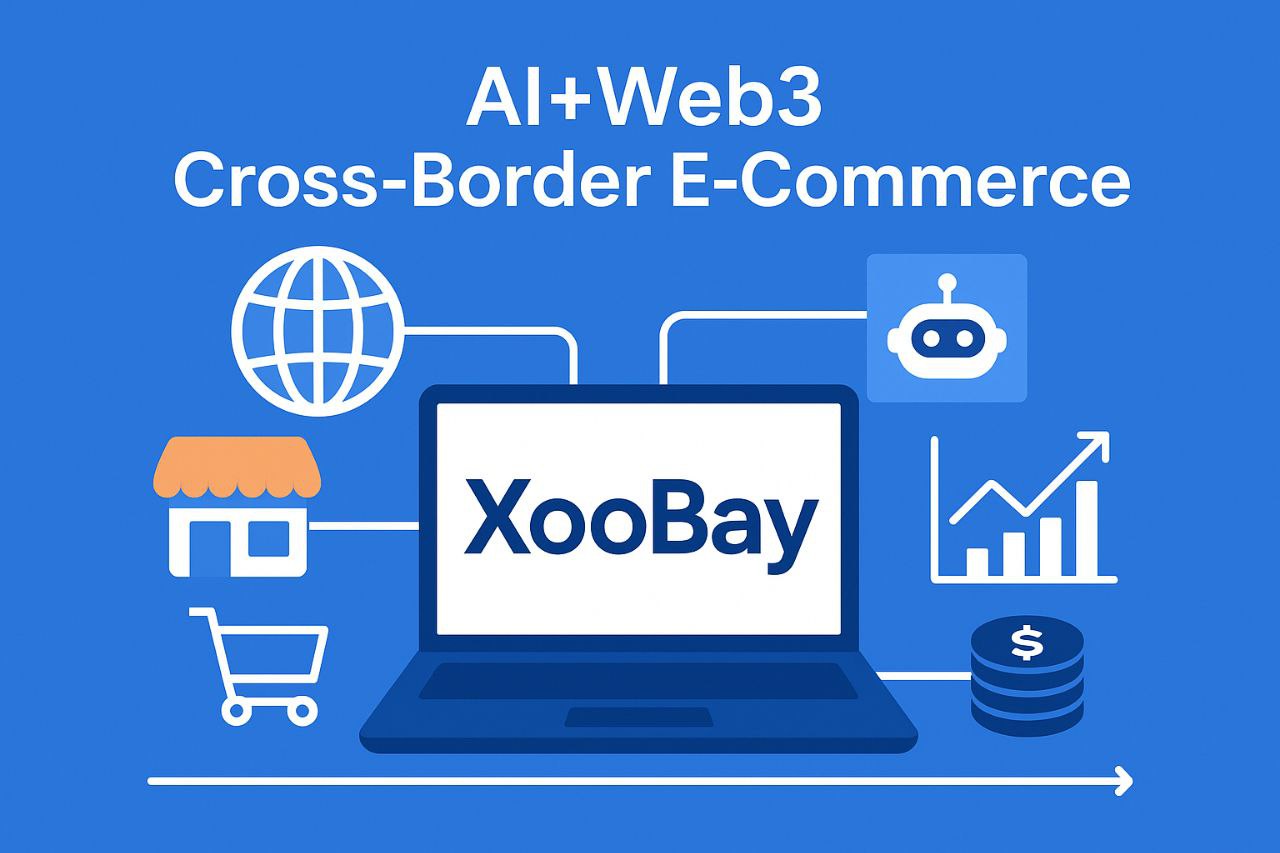
Against this backdrop, a Web3 cross-border e-commerce platform incubated by Hong Kong scientific institutions — XOOBAY (XooBay Global) — is rapidly gaining attention among global sellers and product innovators. Backed by AI-driven automated growth capabilities, a native Web3 on-chain asset system, and the dual policy advantages of Hong Kong’s established cross-border trade and Web3 hub status, XOOBAY is widely viewed as a “structural incremental opportunity” for the next phase of cross-border e-commerce.
The Web3 Dilemma of Traditional E-Commerce Giants
Industry analysts point out that traditional platforms such as Alibaba and JD.com face multiple challenges in their Web3 transformation.
First, their complex legacy structures mean that Web3 upgrades directly impact core commercial interests. Their profit models rely heavily on advertising fees, paid traffic, and transaction commissions, while Web3 token systems, on-chain points, and asset-based membership models inherently reduce dependence on GMV-driven advertising economics.
Second, centralized data ownership fundamentally conflicts with Web3’s principles of transparency and autonomy. Web3 requires verifiable data, user-controlled assets, and on-chain traceability, whereas traditional platforms retain full control over operational data, leaving merchants unable to migrate or independently manage their own user assets.
In addition, the high cost of international expansion presents another obstacle. Heavy advertising spend, complex logistics and customs clearance, weak overseas localization, and data silos continue to raise entry barriers for small and medium-sized brands.
Over the past few years, traditional platforms experimented with Web3 initiatives such as NFTs and “on-chain points,” but most were scaled back or discontinued due to regulatory pressure, internal business conflicts, and path dependence within legacy systems.
XOOBAY’s Differentiated Advantages
Unlike traditional platforms, XOOBAY is not applying Web3 as a patch on legacy e-commerce structures. Instead, it is building a natively Web3 cross-border business model from the ground up. Its goal is not to become “the next Alibaba,” but to serve as an AI + Web3 growth infrastructure for globalizing enterprises.
AI-powered automated growth engines represent XOOBAY’s first major breakthrough. The platform provides AI-driven product image and copy generation, SEO and GEO content creation, pricing and sales forecasting, intelligent advertising optimization, and automated multilingual content production. This gives small and medium-sized merchants access to technological capabilities previously reserved for large brands.
On-chain asset self-management is XOOBAY’s core innovation. Its Web3 framework includes on-chain membership systems, traceable on-chain orders, programmable reward points (tokenized and reusable across borders), and portable data assets. This fundamentally resolves the long-standing “platform lock-in” problem of traditional e-commerce. For the first time, users, loyalty points, and repurchase relationships become merchant-owned assets, rather than platform-controlled resources.
Notably, XOOBAY enables “zero-barrier global expansion.” Merchants do not need blockchain knowledge, wallet deployment, or on-chain operational expertise. They can list products, manage orders, and convert user behavior seamlessly, making XOOBAY one of the world’s most lightweight Web3 cross-border e-commerce solutions.
Core Differences Among Platforms
From a platform perspective, Alibaba represents centralized e-commerce, JD.com focuses on centralized supply-chain-driven e-commerce, while XOOBAY positions itself as native Web3 cross-border infrastructure.
In terms of business model, Alibaba is traffic-centric, JD.com emphasizes fulfillment and logistics, whereas XOOBAY is an AI-driven, Web3 asset-oriented platform.
Merchant costs also differ significantly. Alibaba and JD.com operate high-cost models combining advertising, commissions, and logistics fees, while XOOBAY offers a low-cost structure with no hidden commissions.
Data ownership is where the contrast is most pronounced. On Alibaba and JD.com, data belongs to the platform; on XOOBAY, merchant data is owned on-chain, portable, and verifiable, allowing merchants to directly benefit from platform growth.
In user operations, Alibaba and JD.com rely on closed ecosystems, whereas XOOBAY provides an on-chain membership system that can be reused across platforms.
Regarding global scalability, traditional platforms struggle with heavy, hard-to-replicate models and asset-intensive expansion. XOOBAY, by contrast, leverages a lightweight structure and cross-border token circulation to scale rapidly across regions.
Hong Kong’s Web3 Policy Advantage
Between 2023 and 2025, the Hong Kong government has actively advanced a compliant virtual asset framework, promoted Web3 enterprise adoption, and introduced regulatory sandboxes to attract global Web3 businesses. XOOBAY benefits directly from this policy environment, gaining inherent advantages in compliance, token design, and cross-border payments.
The continued expansion of global virtual assets provides a strong foundation for Web3 e-commerce. According to multiple blockchain research institutions, the global Web3 user base grew by over 40% in 2024–2025, with on-chain payments expanding to more than 100 countries and regions. The RWA market is projected to reach USD 10–16 trillion by 2030.
XOOBAY is actively advancing tokenized loyalty points, asset-based cross-border membership rights, and unified on-chain operational tools. These tokens are not transaction tokens, but representations of user value. Under compliant frameworks, they can be reused across sites, increasing repurchase rates and loyalty while significantly reducing cross-border marketing costs.
The Future of E-Commerce: From Platform Dependence to Asset Autonomy
The future of e-commerce is shifting from platform dependence to asset autonomy. AI enables global marketing automation, Web3 empowers independent management of data and assets, and Hong Kong provides regulatory clarity and policy support, forming a strong foundation for the next wave of digital asset growth.
XOOBAY is not replicating Alibaba or JD.com. Instead, it is defining a new paradigm — transforming global merchants from mere sellers into digital asset operators who share in platform growth.
As cross-border e-commerce enters a new cycle, XOOBAY represents a clear and actionable direction: AI drives efficiency, Web3, and global operations become transparent and interoperable. For merchants seeking sustainable growth, this path is no longer theoretical — it is rapidly becoming reality on XOOBAY.